First-time visitors
Anchor each day around one major attraction or area in Lithuania, leave evenings flexible, and skip the second museum. Use one orientation tour early to get your bearings.
See suggested experiences
Preview travel guide
A practical overview of Lithuania: where to start, how the destination is laid out, when to visit, and how to plan a first trip.
Lithuania is the largest and southernmost of the three Baltic states in northeastern Europe, bordered by Latvia, Belarus, Poland, Russia’s Kaliningrad oblast, and the Baltic Sea. Its landscape includes a Baltic coastal strip with sand dunes, lowlands that rise gradually eastward, and higher inland glacial terrain, reflecting a varied geography that shapes its cultural and political regions.
Lithuania covers 65,286 square kilometers, stretching from the Baltic Sea coast in the west to the elevated Baltic Highlands inland. The country’s major cities are Vilnius, the capital located in the southeast at the confluence of the Neris and Vilnia rivers, and Kaunas, situated west of Vilnius where the Neman and Neris rivers meet. Other important urban areas are distributed across the country, often near river valleys or transport routes connecting to neighboring Latvia, Belarus, Poland, and the Russian Kaliningrad oblast. Lithuania's layout facilitates both coastal maritime activities and inland agricultural and industrial zones.
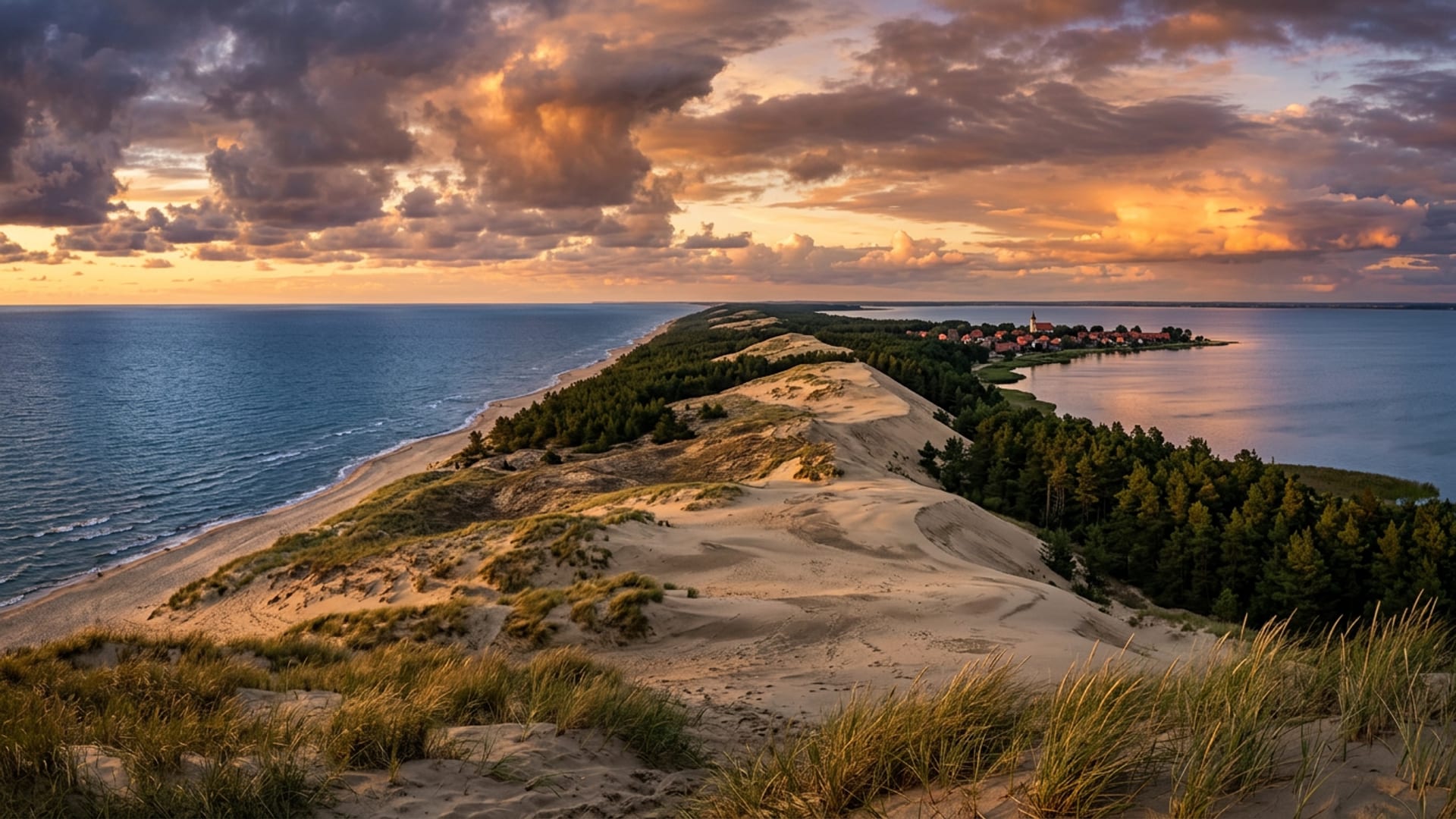
Vilnius, Lithuania’s largest city and political centre, includes distinct areas like the Old Town, known for its historic architecture, and Užupis, a bohemian district with an artistic community. Kaunas features the Old Town and the New Town, with cultural institutions and riverfront parks. Coastal areas such as Palanga and Klaipėda serve as key seaside resorts and ports. The Curonian Spit, a unique sandy peninsula shared with Russia’s Kaliningrad oblast, features dunes and nature reserves. These neighbourhoods and districts reflect Lithuania’s blend of urban life, history, and access to nature.
Lithuania’s geography ranges from maritime lowlands along the Baltic Sea coast, characterized by sand dunes and a maritime depression, to glacially formed highlands inland. The climate is temperate with distinct seasons: winters are cold and snowy, while summers are mild and pleasant. Spring brings blooming landscapes, and autumn features colorful foliage. The country’s position in northeastern Europe means it experiences a continental climate moderated somewhat by the Baltic Sea, influencing agriculture, tourism, and outdoor activities throughout the year.
Lithuania is best understood as a collection of regions rather than a single-centre destination. First trips usually combine one major arrival city with one or two regional or coastal areas, picked by season and travel pace. Planning is regional: pick the areas first, then the order, then the dates.
Starting points for shaping the trip around the style that fits — not a fixed itinerary.
Anchor each day around one major attraction or area in Lithuania, leave evenings flexible, and skip the second museum. Use one orientation tour early to get your bearings.
See suggested experiencesA 2–3 day visit in Lithuania works best when you commit to one base and one or two anchors per day, rather than moving between towns or trying to "see everything".
See suggested experiencesSeven days or more lets you pair a city stay with a regional or coastal add-on. Pick a contrast — urban + nature, or central + countryside — and use the longer window for slower mornings.
See suggested experiencesChoose attractions with clear timings and skip-the-line tickets, keep at least one outdoor or interactive stop in each day, and protect downtime — pacing matters more with kids.
See suggested experiencesBuild the trip around the landscape: trails, viewpoints, day-from-base outings, and any signature activity. Book weather-sensitive plans early and keep a buffer day if you can.
See suggested experiencesPick one or two stretches of coast rather than chasing the perfect beach. Local boats and ferries set the pace; flexible dates beat fixed itineraries when weather is in play.
See suggested experiencesFour distinct seasons each shape a different trip. Pick the season for what you want to do, not the other way around.
Mild, lighter crowds, gardens at their best. Good time to visit Lithuania if you want walking weather without summer prices.
Peak season — best weather but the busiest, most-expensive window. Book major sites and trains weeks ahead.
Often the quiet sweet spot: autumn colour, harvest food, lower hotel rates. Pack layers — late autumn turns cool fast.
Quietest, cheapest, sometimes coldest. Good for museum-led city visits, Christmas markets, or skiing where applicable.
Weather varies by region and altitude — check forecasts close to travel rather than assuming the season.
Direct answers to the questions most travellers actually ask before they book.
Named districts, beaches, viewpoints and points of interest. Hover a pin to see its description.
Other travel resources that complement this preview guide.
Are you a hotel, tour operator, local guide, contributor, or potential partner? We're expanding the Lithuania guide and would like to hear from you. Send us a note and we'll reply personally.